Challenging Behaviour (Teacher Summer Courses) - Online Course
Standalone or Part of Major Award
A practical EPV / CPD course supporting teachers and professionals to develop inclusive, preventative approaches to behaviour using evidence-based strategies and real classroom application.
QQI Credits:
QQI Level:
QQI Code: 875 EPV O
Quizzes: 15
LMS Sessions: 17
WANT TO KNOW MORE ABOUT THIS COURSE?
Check below for more details.
Single modules are the best way to build your path to becoming fully certified and
get recognised by NFQ education point scheme.
This course is designed for professionals working in education and related support services who wish to strengthen their approach to behaviour support in a practical and inclusive way.
It may be particularly suitable for:
Primary and post-primary teachers
Special education teachers and SEN coordinators
School leaders and support staff
Psychologists and educational support professionals
Occupational therapists working in school contexts
Early years educators and AIM support workers
Whether you are experienced in behaviour support or looking to build confidence in this area, this course provides structured, accessible learning that can be applied directly to your own setting.
Access to the Programme
The programme is designed to be accessible, practical, and relevant for busy professionals. It is delivered through a structured and supportive format that encourages active participation, reflection, and application.
Flexible learning elements, including online resources and guided activities, allow participants to engage with the course alongside their professional responsibilities
Entry Criteria
This course is open to individuals working in, or preparing to work in, relevant education, health, care, or support settings.
It may be particularly suitable for teachers, psychologists, occupational therapists, preschool educators, AIM support workers, SNAs, and related professionals.
Learners should have an interest in inclusive practice and behaviour support, along with a willingness to engage in reflective and practice-based learning. Current professional experience in an educational or support setting is beneficial but not essential.
English Language Requirements
Learners should have a good standard of English to participate fully in the course and engage with course materials.
If English is not your first language and you are unsure whether this course is suitable for you, please contact hello@forustraining.ie for guidance.
IT Skills and Equipment Required
Participants will need:
Basic computer literacy
Access to a laptop or desktop computer
A reliable internet connection
Ability to access videos, PDFs, and online learning materials
A modern web browser
Word processing software for completing tasks
For live or interactive sessions (where applicable):
Access to Zoom or equivalent platform
Working microphone and speakers/headset
Webcam (if required for participation)
Reasonable Accommodation
Forus Training is committed to supporting learners to participate as fully as possible in their course.
Learners who may need reasonable accommodation or additional support are encouraged to contact their Course Advisor as early as possible so that appropriate supports can be discussed.
This course is structured around practical, classroom-focused learning across key areas of behaviour support:
Understanding behaviour as communication
Environmental and instructional influences on behaviour
Introduction to the ABC (Antecedent–Behaviour–Consequence) framework
Structured observation and behaviour analysis
Designing proactive classroom routines and expectations
Reinforcement systems that support pupil dignity
Prompting and gradual fading strategies
Teaching replacement skills and supporting engagement
De-escalation and preventative approaches
Supporting pupils with additional needs and neurodiversity
School Self Evaluation (SSE) and behaviour improvement planning
Reflective practice and evaluation of impact
Participants engage with real-life case scenarios and adapt strategies to their own classroom or professional context.
Learning Outcomes
By the end of this course, participants will be able to:
Develop an understanding of key factors influencing behaviour in classroom settings
Use structured observation approaches, including the ABC framework
Identify triggers and maintaining factors associated with behaviour
Explore practical, inclusive strategies to support engagement and participation
Design behaviour support approaches aligned to pupil needs
Reflect on the impact of interventions within their own setting
Build confidence in applying preventative and ethical behaviour strategies
Engage with SSE processes to support continuous improvement
Blended / Online / Live Online (as applicable)
Includes structured learning materials, guided activities, and facilitated engagement.
WHAT WILL YOU DO ON THIS COURSE?
The Challenging Behaviour (Teacher Summer Courses) - Online course outline can be found below...
Induction - Before You Start
Learner Induction
1/32
Learner Induction - Quiz Questions
2/32
Assessment
3/32
Concept of Challenging and Inappropriate Behaviour
Session 1
Concept of Challenging and Inappropriate Behaviour
4/32
Concept of Challenging and Inappropriate Behaviour - Quiz Questions
9 Questions5/32
Observing and Measuring Behaviour and Goals of PBS
Session 2
Observing and Measuring Behaviour and Goals of PBS
6/32
Observing and Measuring Behaviour and Goals of PBS - Quiz Questions
11 Questions7/32
Factors that Influence Behaviour
Session 3.1
Internal Factors that Influence Behaviour
8/32
Internal Factors that Influence Behaviour - Quiz Questions
8 Questions9/32
Session 3.2
External Factors that Influence Behaviour
10/32
External Factors that Influence Behaviour - Quiz Questions
5 Questions11/32
Session 3.3
Theories on Behaviour
12/32
Theories on Behaviour - Quiz Questions
9 Questions13/32
Positive and Negative Reinforcement and Strategies
Session 4
Positive and Negative Reinforcement and Strategies
14/32
Positive and Negative Reinforcement and Strategies - Quiz Questions
7 Questions15/32
Setting Events, Antecedents, Strategies, and ABC Chart
Session 5.1
Setting Events, Antecedents, Strategies, and ABC Chart
16/32
Setting Events, Antecedents, Strategies, and ABC Chart - Quiz Questions
6 Questions17/32
Session 5.2
Setting Events, Antecedents, Strategies, and ABC Chart
18/32
Setting Events, Antecedents, Strategies, and ABC Chart - Quiz Questions
6 Questions19/32
Developing a PBS Plan
Session 6.1
Developing a PBS Plan
20/32
Developing a PBS Plan - Quiz Questions
10 Questions21/32
Session 6.2
Developing a PBS Plan
22/32
Developing a PBS Plan - Quiz Questions
5 Questions23/32
Behaviours and Strategies Used in Practice
Session 7
Exploration of Behaviours and Strategies Used in Practice
24/32
Exploration of Behaviours and Strategies Used in Practice - Quiz Questions
6 Questions25/32
Evaluation of PBS
Session 8
PBS Values and Case Study Evaluation of PBS
26/32
PBS Values and Case Study Evaluation of PBS - Quiz Questions
7 Questions27/32
Evaluation of Positive and Negative Reinforcement
Session 9
Evaluation of Positive and Negative Reinforcement
28/32
Evaluation of Positive and Negative Reinforcement - Quiz Questions
8 Questions29/32
Four Strategies of PBS, Positive Environments and Teaching Skills Guidelines
Session 10
Four Strategies of PBS, Positive Environments and Teaching Skills Guidelines
30/32
Four Strategies of PBS, Positive Environments and Teaching Skills Guidelines - Quiz Questions
10 Questions31/32
End of Course Session
32/32
FIND WHAT PEOPLE SAY ABOUT THIS COURSE.
All the reviews about Challenging Behaviour (Teacher Summer Courses) - Online course
This course uses a practice-based, participation-focused approach rather than formal examinations.
Participants may engage in:
Reflective activities
Structured observation tasks
Practical strategy design
Discussion forums and peer engagement
Facilitators provide ongoing guidance, feedback, and support throughout the course. Feedback is focused on practical application, reflective thinking, and continuous improvement.
Learner Welfare
At Forus Training, we aim to create a positive, inclusive, and respectful learning environment.
Our team is available to support learners throughout their learning experience, and we encourage participants to reach out if they need guidance in relation to course participation, access, or learning support.
Supports for Learners with Disabilities and Specific Learning Difficulties
Forus Training is committed to inclusive learning. Supports may be available for learners with disabilities or specific learning difficulties.
Participants are encouraged to contact their Course Advisor to discuss individual needs so that appropriate supports can be explored.
Participants will receive confirmation of attendance or completion, where applicable.
This course may support your continuing professional development. Participants should check with their employer or professional body regarding specific CPD or EPV recognition requirements.
After completing this course, learners may wish to continue their professional development through further short courses, specialist workshops, or advanced study in related areas such as inclusion, behaviour support, wellbeing, or educational practice.
Registration can take place through our website, this will involve you completing the relevant application form, providing us with your personal information so we can complete the registration on our side. Registration can also take place by telephone/email/Whatsapp or in person, this will involve you providing us details of the course you wish to study, providing us your payment details and agreeing to proceed with the purchase. By completing registration, you are agreeing to the terms and conditions set out herein.
Please read Terms & Conditions here.





DO YOU WANT TO GET A COURSE BROCHURE?
A practical EPV / CPD course supporting teachers and professionals to develop inclusive, preventative approaches to behaviour using evidence-based strategies and real classroom application.

What is QQI?
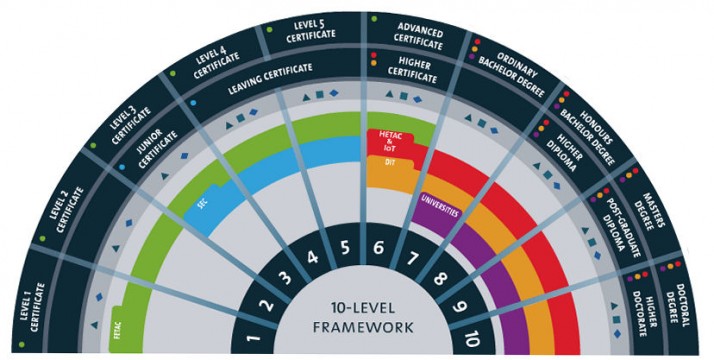
QQI is the state agency responsible for the external quality assurance of further and higher education and training in Ireland.
QQI are responsible for the external quality assurance of further and higher education and training in Ireland.
QQI validate programmes, make awards and are responsible for the promotion, maintenance, development and review of the National Framework of Qualifications (NFQ).
QQI also inform the public about the quality of education and training programmes and qualifications, and advise the Government on national policy regarding quality assurance and enhancement in education and training.