The Science of Learning and Behaviour Change (Teacher Summer Courses) - Online Course
Standalone or Part of Major Award
Explore evidence-informed approaches to learning, motivation and behaviour change. This online professional learning course supports inclusive classroom practice through ABC observation, reinforcement, prompting, reflection and SSE-aligned improvement planning.
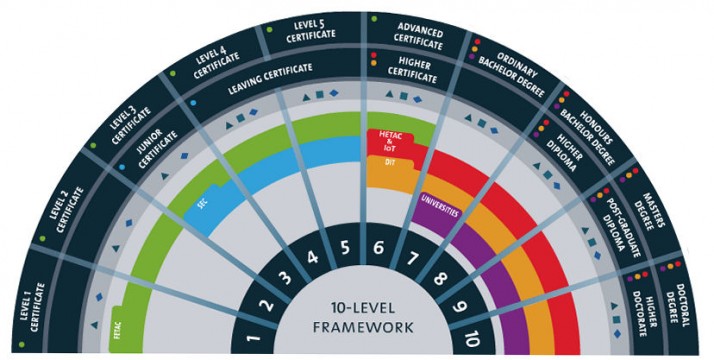
QQI Credits:
QQI Level:
QQI Code: 889 EPV O
Quizzes: 12
LMS Sessions: 14
WANT TO KNOW MORE ABOUT THIS COURSE?
Check below for more details.
Single modules are the best way to build your path to becoming fully certified and
get recognised by NFQ education point scheme.
This course may be suitable for you if you are working in, or preparing to work in, an education, early years, care, support or therapeutic setting and would like to strengthen your understanding of learning and behaviour change.
It may be particularly relevant for:
EPV Teachers and school staff seeking practical approaches to inclusive classroom support
Psychologists and occupational therapists supporting behaviour, learning and participation
Preschool teachers and early years educators supporting engagement and routines
AIM support workers and SNAs working with children with additional needs
Employers, schools and services seeking accessible professional development for staff teams
The course is designed to be approachable for experienced professionals and those newer to the topic. It focuses on practical application, reflection and real-world professional learning.
Access to the Programme
This programme is delivered online through a secure, user-friendly Virtual Learning Environment (VLE). Learners complete structured asynchronous learning activities, moderated discussion forums and offline classroom or practice-based tasks.
The format is designed to support busy professionals by combining flexible online study with practical implementation in real education or support settings.
Entry Criteria
This course is open to individuals working in, or preparing to work in, relevant education, health, care or support settings. It may be particularly suitable for teachers, psychologists, occupational therapists, preschool educators, AIM support workers, SNAs and related professionals, depending on the learner’s role and setting.
Learners should have an interest in inclusive practice, learning, motivation and behaviour support, and a willingness to engage in reflective professional learning. Current professional experience or prior study in education, care, disability, psychology, early years or support work may be beneficial.
English Language Requirements
Learners should have a good standard of English to participate fully in the course and engage with course materials. If English is not your first language and you are unsure whether this course is suitable for you, please contact hello@forustraining.ie for guidance.
IT Skills and Equipment Required
Learners should have:
Basic computer literacy
Access to a laptop or desktop computer
A reliable internet connection
A modern web browser
Ability to access videos, PDFs and online learning materials
Ability to use word processing tools where required
Ability to upload assignments or learning records to the online learning platform
As this course is delivered online, learners should also be comfortable using discussion forums and accessing resources through a VLE.
Reasonable Accommodation
Forus Training is committed to supporting learners to participate as fully as possible in their course. Learners who may need reasonable accommodation or additional support are encouraged to contact their Course Advisor as early as possible so that appropriate supports can be discussed.
This course is organised into five modules, combining 10 hours of asynchronous online learning with 10 hours of timetabled offline or self-directed professional learning activities.
Module 1: Foundations of Behavioural Science in Education
Behaviour as communication
Inclusive and ethical classroom practice
Introduction to the ABC framework
Linking behaviour support to School Self Evaluation
Identifying a classroom behaviour or engagement focus area
Module 2: Structured Observation and ABC Analysis
Using ABC observation in practice
Identifying antecedents and consequences
Distinguishing observation from interpretation
Ethical data collection in classroom settings
Establishing baseline evidence
Module 3: Reinforcement, Motivation and Engagement
Reinforcement principles in classroom practice
Intrinsic and extrinsic motivation
Dignity-preserving reinforcement systems
Preventative classroom routines
Designing and trialling engagement strategies
Module 4: Prompting, Fading and Skill Teaching
Prompting strategies
Gradual fading of supports
Teaching replacement behaviours
Building independence and self-regulation
Supporting learners with additional needs
Module 5: Evaluation, Reflection and SSE
Evaluating behaviour support strategies
Defining measurable success indicators
Reviewing classroom evidence
Embedding improvement in the SSE cycle
Completing an SSE-aligned behaviour improvement report
Learning Outcomes
By the end of this course, participants will be supported to:
Develop understanding of key principles underpinning behaviour, learning and motivation
Describe behaviour using objective, non-judgemental language
Use ABC-style observation to identify patterns and contributing factors
Explore the relationship between antecedents, behaviour, consequences and the learning environment
Identify strategies for inclusive reinforcement, prompting and fading
Design a practical support strategy responding to an identified classroom or support need
Reflect on implementation and professional practice
Evaluate impact using success criteria aligned to School Self Evaluation
Compile an electronic learning record as evidence of professional learning and classroom application
Online asynchronous learning through a secure VLE, supported by moderated discussion forums, structured learning materials, practical implementation tasks, reflective activities and facilitator feedback.
WHAT WILL YOU DO ON THIS COURSE?
The The Science of Learning and Behaviour Change (Teacher Summer Courses) - Online course outline can be found below...
Induction - Before You Start
Learner Induction
1/26
Learner Induction - Quiz Questions
2/26
Assessment
3/26
Introduction to Applied Behaviour Analysis (ABA)
Session 1
Introduction to Applied Behaviour Analysis (ABA)
4/26
Introduction to Applied Behaviour Analysis (ABA) - Quiz Questions
10 Questions5/26
Behaviour and the Wider Environment
Session 2.1
3-Term Contingency
6/26
3-Term Contingency
10 Questions7/26
Session 2.2
Beyond ABCs: Behaviour and the Wider Environment
8/26
Beyond ABCs: Behaviour and the Wider Environment - Quiz Questions
10 Questions9/26
Introduction to Reinforcement
Session 3
An Introduction to Reinforcement
10/26
An Introduction to Reinforcement - Quiz Questions
10 Questions11/26
Preference Assessments
Session 4
Preference Assessments
12/26
Preference Assessments - Quiz Questions
10 Questions13/26
Reinforcement in Skill Acquisition
Session 5
Reinforcement in Skill Acquisition
14/26
Reinforcement in Skill Acquisition - Quiz Questions
10 Questions15/26
Generalisation
Session 6
Generalisation
16/26
Generalisation - Quiz Questions
10 Questions17/26
Using Prompts
Session 7
An Introduction to Prompts
18/26
An Introduction to Prompts - Quiz Questions
10 Questions19/26
Session 8
Using Prompts
20/26
Using Prompts - Quiz Questions
10 Questions21/26
Special Applications of Behaviour Change Technologies
Session 9
Special Applications of Behaviour Change Technologies
22/26
Special Applications of Behaviour Change Technologies - Quiz Questions
10 Questions23/26
Putting it Together
Session 10
Putting it Together: Teaching with ABA
24/26
Putting it Together: Teaching with ABA - Quiz Questions
10 Questions25/26
End of Course Session
26/26
FIND WHAT PEOPLE SAY ABOUT THIS COURSE.
All the reviews about The Science of Learning and Behaviour Change (Teacher Summer Courses) - Online course
Assessment is formative and practice-based. There is no examination component.
Each module includes a structured assignment aligned to the course learning outcomes. Activities may include reflective tasks, observation exercises, strategy planning, implementation tasks, moderated discussion and an SSE-aligned capstone report.
To successfully complete the course, participants are expected to:
Complete all module assignments
Meet forum participation requirements
Engage in documented offline classroom or practice-based application
Submit a complete electronic learning record
Facilitator support is active and moderated. Facilitators guide discussion, provide feedback, support deeper reflection and help learners connect course content to professional practice.
Learner Welfare
At Forus Training, we aim to create a positive, inclusive and respectful learning environment. Our team is available to support learners throughout their learning experience, and we encourage participants to reach out if they need guidance in relation to course participation, access or learning support.
Learners are expected to engage respectfully with peers, maintain confidentiality when discussing classroom or practice-based examples, and use pseudonyms where relevant.
Supports for Learners with Disabilities and Specific Learning Difficulties
Forus Training welcomes learners with disabilities and specific learning difficulties. Where possible, reasonable accommodations can be discussed to support participation, access to materials and completion of learning activities.
Course accessibility features may include a clearly structured VLE layout, downloadable templates, flexible submission formats, written guidance and facilitator support upon request.
Learners are encouraged to contact their Course Advisor as early as possible to discuss support needs.
Participants will receive confirmation of attendance/completion, where applicable, following verification that course requirements have been met.
Certificates are issued upon successful completion of the required course activities, assignments, forum participation and electronic learning record, where applicable.
Please check with your professional body, school, employer or relevant organisation regarding CPD recognition requirements.
EPV approval, CPD hours, CPD points or professional body recognition should only be confirmed where this has been formally verified.
After completing this course, learners may wish to continue their professional development through further short courses, specialist workshops or advanced study in related areas such as inclusion, behaviour support, autism, neurodiversity, early years practice, wellbeing, education support or therapeutic approaches.
This course does not guarantee progression to employment, promotion, registration or professional recognition.
Registration can take place through our website, this will involve you completing the relevant application form, providing us with your personal information so we can complete the registration on our side. Registration can also take place by telephone/email/Whatsapp or in person, this will involve you providing us details of the course you wish to study, providing us your payment details and agreeing to proceed with the purchase. By completing registration, you are agreeing to the terms and conditions set out herein.
Please read Terms & Conditions here.





DO YOU WANT TO GET A COURSE BROCHURE?
Explore evidence-informed approaches to learning, motivation and behaviour change. This online professional learning course supports inclusive classroom practice through ABC observation, reinforcement, prompting, reflection and SSE-aligned improvement planning.

What is QQI?
QQI is the state agency responsible for the external quality assurance of further and higher education and training in Ireland.
QQI are responsible for the external quality assurance of further and higher education and training in Ireland.
QQI validate programmes, make awards and are responsible for the promotion, maintenance, development and review of the National Framework of Qualifications (NFQ).
QQI also inform the public about the quality of education and training programmes and qualifications, and advise the Government on national policy regarding quality assurance and enhancement in education and training.